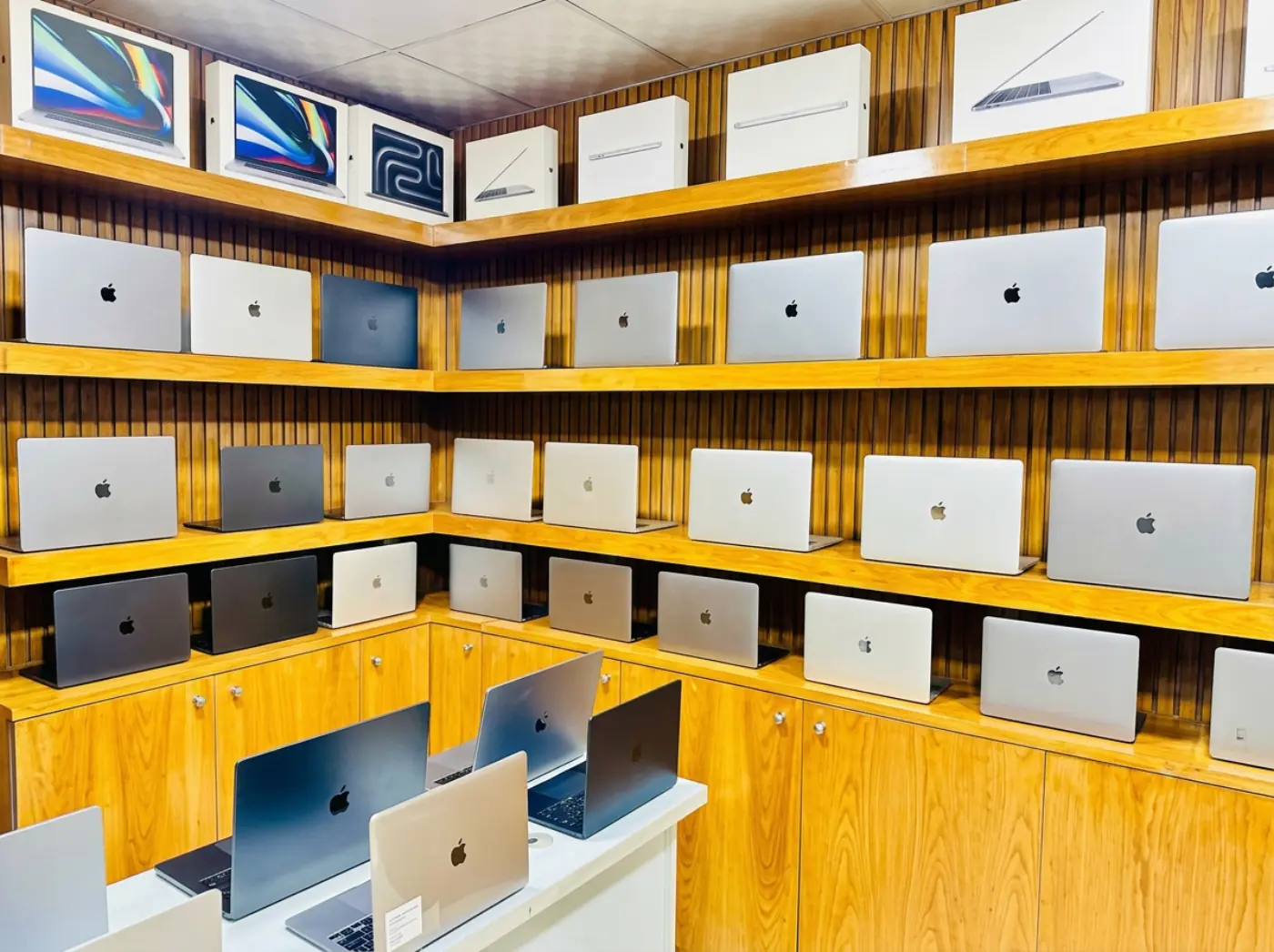
Why doctors choose Mac in Pakistan
Reliability · works for years without IT support. Battery for ward/clinic rounds. macOS handles browser-based EMRs flawlessly. Microsoft Office + PowerPoint for grand rounds + lectures. Clean professional appearance for patient/colleague meetings.
Most Pakistani EMR systems (Akros, MaxHealth, others) are web-based · Mac runs them in Safari/Chrome with no issues.
House officer / resident tier
Used MacBook Air M1 / M2 8-16GB. Handles EMR, PubMed research, presentation prep, Zoom for teaching. WhatsApp 0312-4690005 for current pricing on each tier.
Portable enough for ward rounds. 12+ hour battery for clinical days.
Consultant / specialist tier
New MacBook Air M3 / Air M4 16/512GB. Better build, latest software, full year warranty.
Or used MacBook Pro 14" M1 Pro 16GB · better screen for radiology/pathology image review.
Radiologist / pathologist tier
MacBook Pro 14"/16" M2 Pro / M3 Pro 32GB. P3 colour accurate for DICOM image review (though dedicated medical displays still recommended for diagnosis).
External 4K monitor essential · DICOM images need large workspace.
Telemedicine setup (post-COVID standard)
MacBook M-series camera + audio is good enough for daily telemedicine.
Upgrade: external 1080p webcam (Logitech Brio) + USB mic (Audio-Technica AT2020) for professional consultation appearance.
EMR + clinical workflow apps
Most Pakistani EMRs (Akros, MaxHealth, custom hospital systems): web-based, work on any Mac.
Epic, Cerner: rarely used in Pakistan but if your hospital has it, check Mac compatibility · usually browser-based.
Drug references: Epocrates, Medscape · both native macOS apps.
Statistical software (SPSS, GraphPad): native macOS versions excellent.
Data privacy + HIPAA-equivalent considerations
Pakistan doesn't have a HIPAA equivalent yet, but PHC and various provincial bodies have guidelines.
Use FileVault (always on by default for Apple Silicon). Strong Apple ID password. Two-factor authentication. Don't store patient data unencrypted on iCloud.