Performance gap · real-world numbers
Single-core: M2 ~15% faster than M1. Multi-core: M2 ~18% faster. GPU: M2 ~25% faster. These are Geekbench/synthetic · real-world workflows often see 5-15% improvement.
What this means: if M1 handled your work, M2 will handle it 15% faster. If M1 struggled (heavy video, 3D), M2 still struggles · just less. Real fix for those workflows is M3 Pro or higher.
Price comparison (Pakistan used market, 2026)
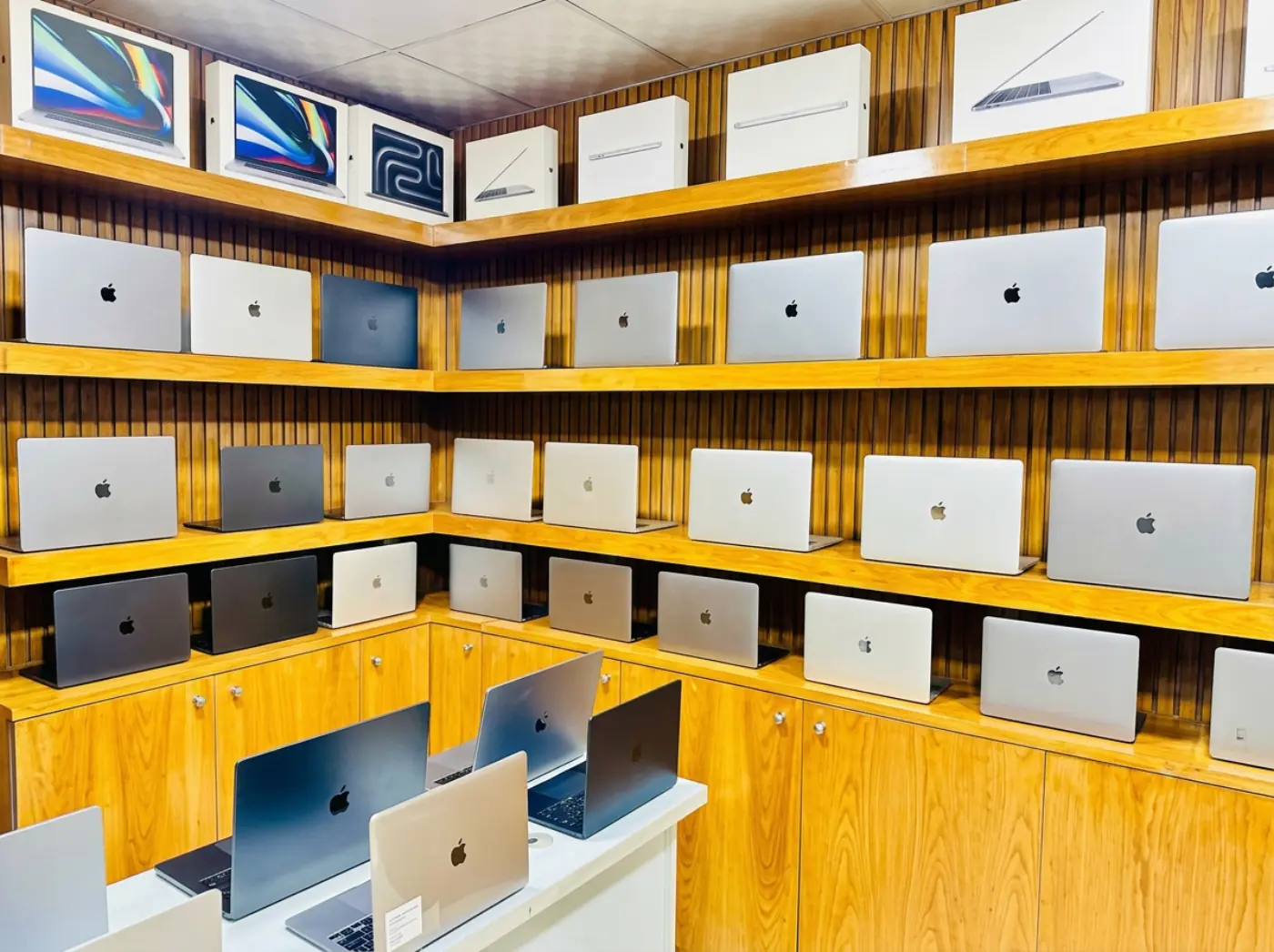
Used MacBook Pro 13" M1 (A2338) and used MacBook Pro 13" M2 (A2338 2022) are both popular — WhatsApp 0312-4690005 for current pricing.
M2 commands 25-30% premium over M1. For 15% more performance, that's not a great rate. Most buyers should choose M1 + spend the difference on better RAM/storage.
Where M2 genuinely justifies the premium
16GB RAM minimum (M2's faster memory bandwidth matters more at 16GB+). Hardware video encoder for ProRes (specifically the M2 hardware engines for ProRes are improved). External display support (M2 supports more displays via DisplayPort 2.1).
Where M1 still wins
Budget-conscious buyer (most students, freelancers). Light-to-medium workload (office, web, light photo/video). Wants the maximum battery life MacBook ever made (M1's efficiency is still industry-leading).
Longevity outlook (2026 perspective)
M1 is now 5 years old. Apple supports macOS for 6+ years from chip release, so M1 has 1-2 more years of full macOS support. M2 has 4+ years remaining.
For a 4-year ownership horizon: M2 is the longer-life bet. For 1-2 year ownership: M1 is the better deal.